
Kill ‘Em All!
Kill pests without harming yourself or your pets
Different pests require different approach. Learn how to get rid of the most common ones.
Easy and quick ways to kill unwanted visitors inside your house.

What kind of Pest control to use?
Cockroaches: Diatomaceous earth, a non-toxic powder made of fossils of tiny aquatic organisms, can be spread in areas where cockroaches have been spotted. It’s harmless to humans but lethal to cockroaches as it damages their exoskeleton. Additionally, boric acid baits can be effective. Always make sure these substances are kept out of reach of children and pets.
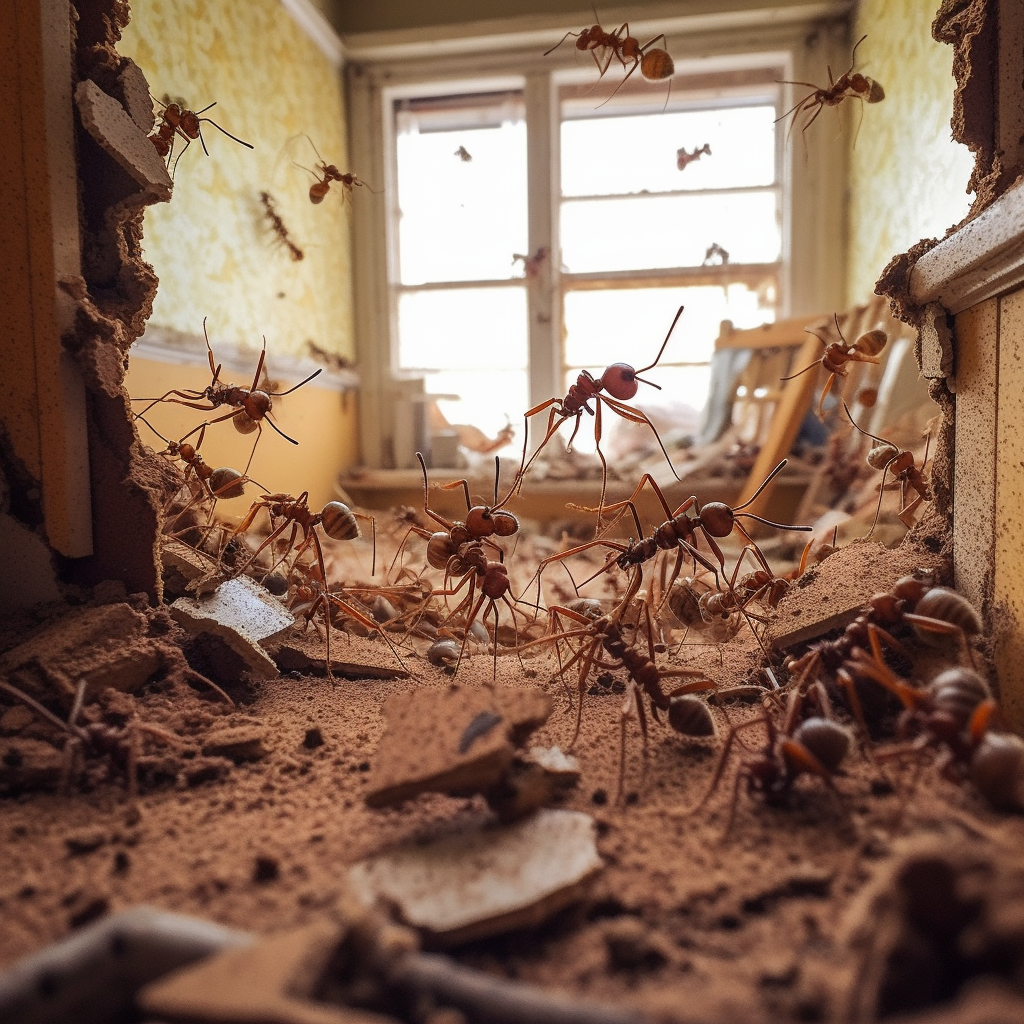
Ants: Certain natural substances, like cinnamon, vinegar, or peppermint oil, can disrupt ant trails and deter them. Diatomaceous earth can also be effective against ants. For serious infestations, baits made from boric acid can be used to kill the entire colony, as worker ants carry the poison back to the nest.
Rodents: Preventative measures are especially important for rodent control. This includes sealing off entry points, keeping food securely stored, and maintaining a clean home. If rodents have already invaded, traps are a common control method. Some people prefer live traps, which capture the rodents unharmed so they can be released outdoors.
Bed Bugs: Bed bugs are notoriously difficult to eradicate, and natural methods are often not enough. Regularly washing bedding in hot water and drying on a high heat setting can kill bed bugs in the fabrics. Diatomaceous earth can be applied in areas where bed bugs have been spotted. However, for serious infestations, professional pest control services are often necessary.
Get advice
Incase your husband, wife or roommates can’t help you – We are here!
Cheap alternatives
Did you know that most of the ways to get rid of pests are not expensive?
Fast working poisons
Nobody wants to battle with these invaders forever.
Locate the problem
Find out all the areas affected and the source if possible.
The of history
Pest Control
The concept of natural pest control has deep roots in human history, dating back to the beginnings of agriculture. Humans have always needed to protect their crops from pests, and they’ve developed many innovative methods to do so long before the invention of synthetic pesticides. Besides that we have been wanting to kill those annoying mosquitos since we lived in the caves.
Ancient Times
Early farmers used simple yet effective methods to protect their crops. For example, they might have intercropped different plants to deter pests or used physical barriers to keep pests away from their crops. They also made use of natural predators. For example, ancient Egyptians used cats to control rodents, and Chinese farmers used ants to control pests in citrus orchards.
Middle Ages and Renaissance
As agriculture became more advanced, farmers developed more sophisticated natural pest control methods. They began to understand the value of crop rotation and fallowing (leaving fields unplanted) to disrupt the life cycle of pests. They also began to recognize the benefits of certain plants in pest control, leading to early forms of companion planting.
18th and 19th Centuries
With the scientific advancements of the Enlightenment and the Industrial Revolution, our understanding of pests and their control methods grew more sophisticated. Scientists began to study insects more closely and understand their life cycles and behaviors. This knowledge led to more effective natural pest control strategies. For example, in the late 19th century, the vedalia beetle was introduced from Australia to California to control the cottony cushion scale that was decimating the citrus industry – an early example of successful biological control.
20th Century
The development of synthetic pesticides like DDT during and after World War II led to a shift away from natural pest control methods, as these new chemicals proved highly effective at killing pests. However, it soon became apparent that these chemicals also had severe environmental and health impacts, leading to a resurgence of interest in natural pest control methods in the later part of the 20th century. Concepts like Integrated Pest Management (IPM), which incorporates a variety of biological, cultural, and physical pest control methods, were developed and began to gain acceptance.
Now
Today, there is a growing awareness of the importance of environmentally friendly and sustainable pest control methods, including those based on natural predators, botanical insecticides, and cultural practices. Natural pest control is increasingly seen as a critical component of sustainable agriculture and responsible gardening.

Cockroach
(Blattodea)
Ant
(formīca )

Mouse
(Genus Mus)

Bed bug
(Cimex lectularius)
250,000+
Known weeds
4,600+
Plant pathogens
250,000
Deaths caused by pesticides yearly
3 Million+
Pesticide poisonings yearly